For players · iPhone and iPad
D20 Adventurers Folio
Fortuna Audaces Iuvat
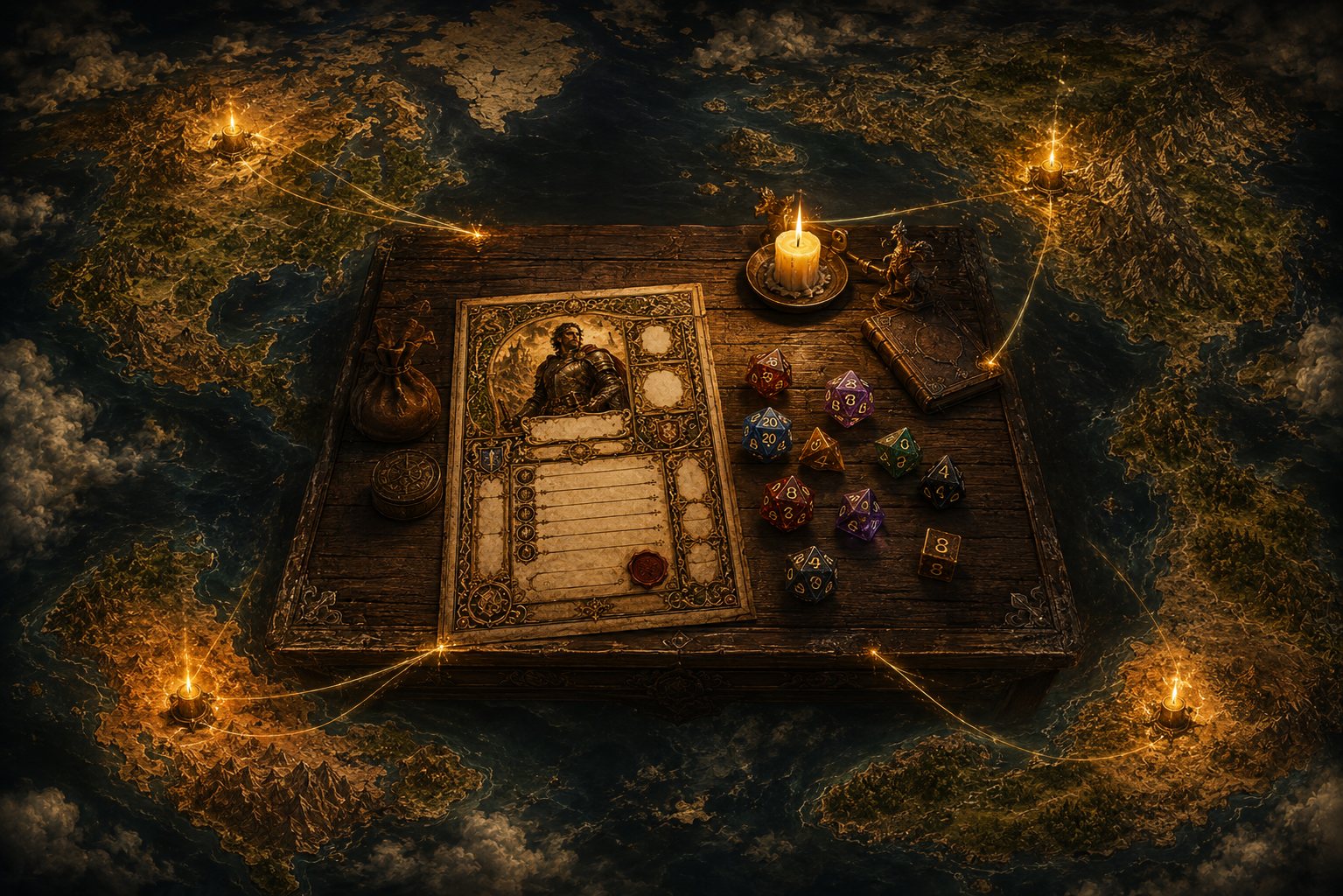
Character sheets worth framing. A painted folio for classic tabletop roleplaying — keep your heroes as living sheets on iPhone and iPad, roll dice that feel like dice, and print a page worth putting on the table.
Getting it
Download on the App Store — free to download, with two complete rule sets, one hero, the dice tray and printing, and in-app purchases for more. The Folio is a single purchase that lifts the one-hero limit and unlocks the painted class pages.
Most character-sheet apps are forms
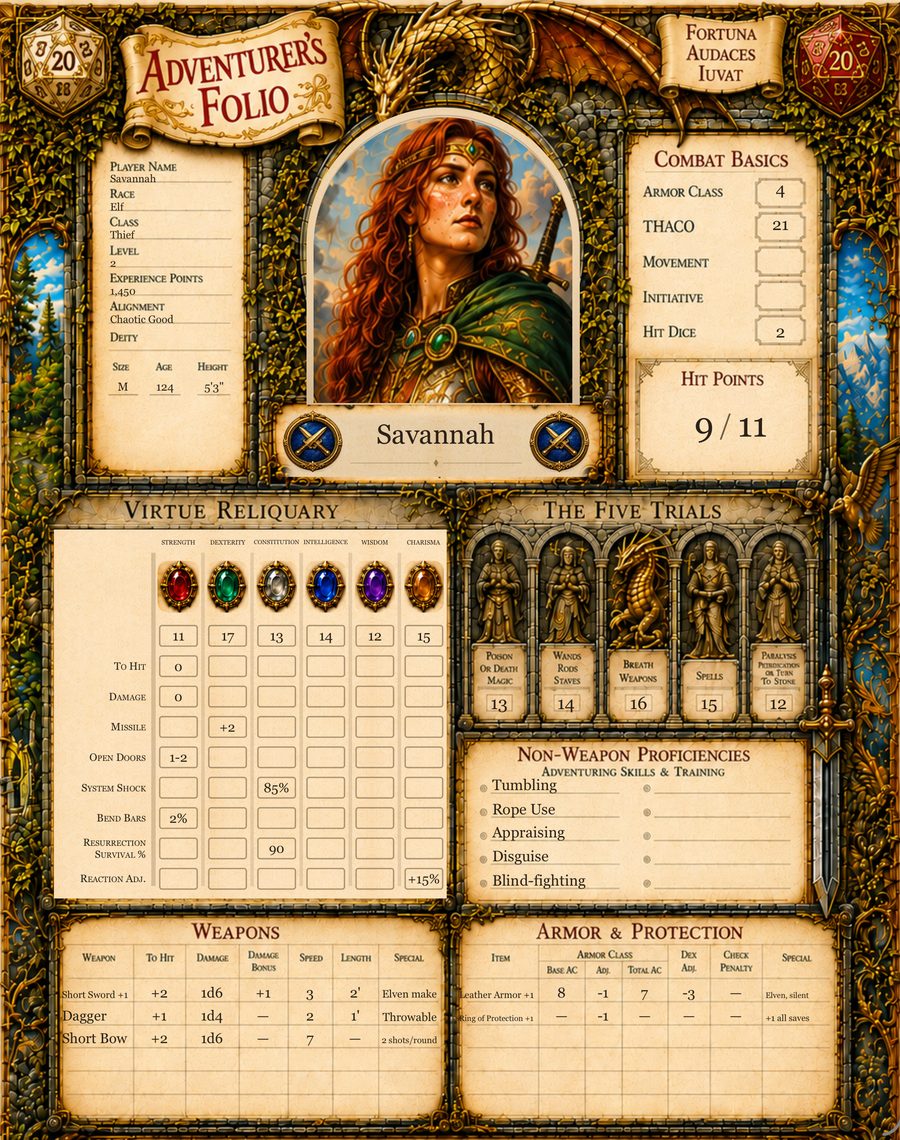
This one is a folio — an illuminated page you actually want to look at, with your character’s numbers typeset into it as though a scribe had filled them in.
Nothing is a text box. Every value is set into the painted art at the place the art left for it. Tap a saving throw and the dice roll. Tap a score and edit it where it sits.
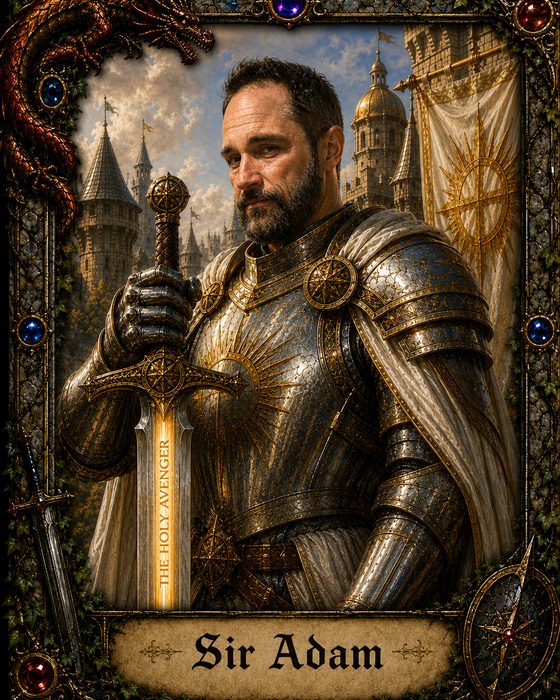
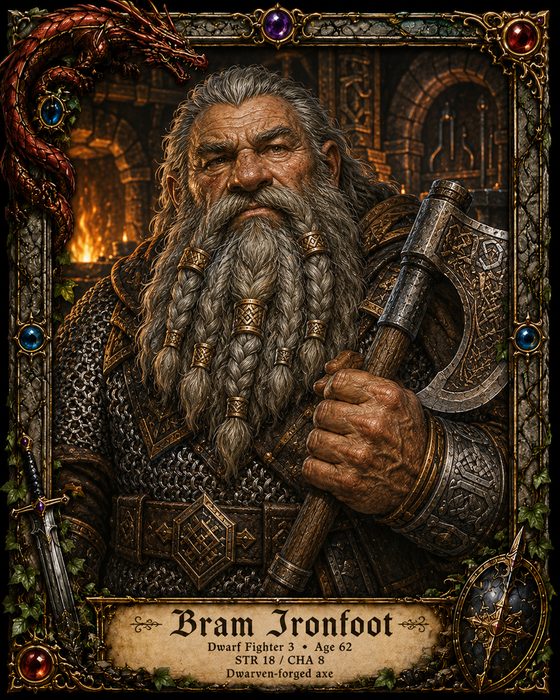
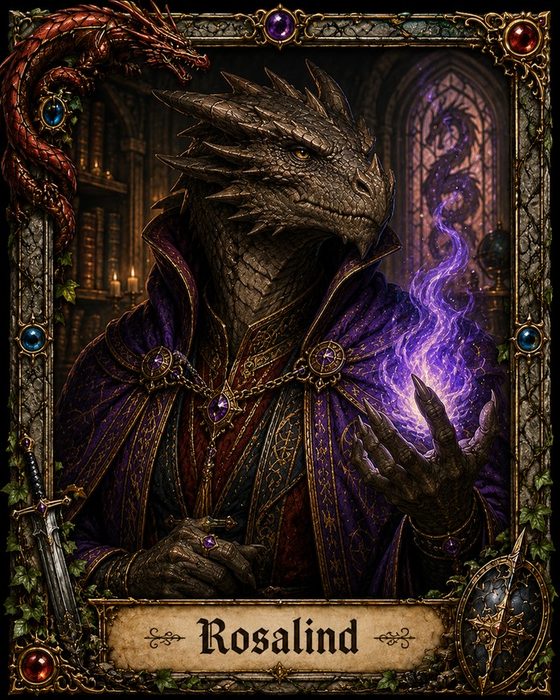
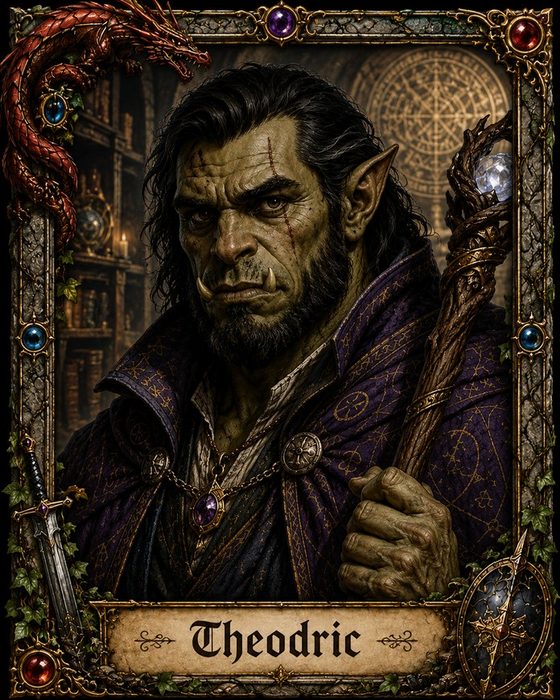
Drop in a picture of your hero and it clips into the painted window, under the same stone-and-gilt arch the page was drawn with.
Dice with weight
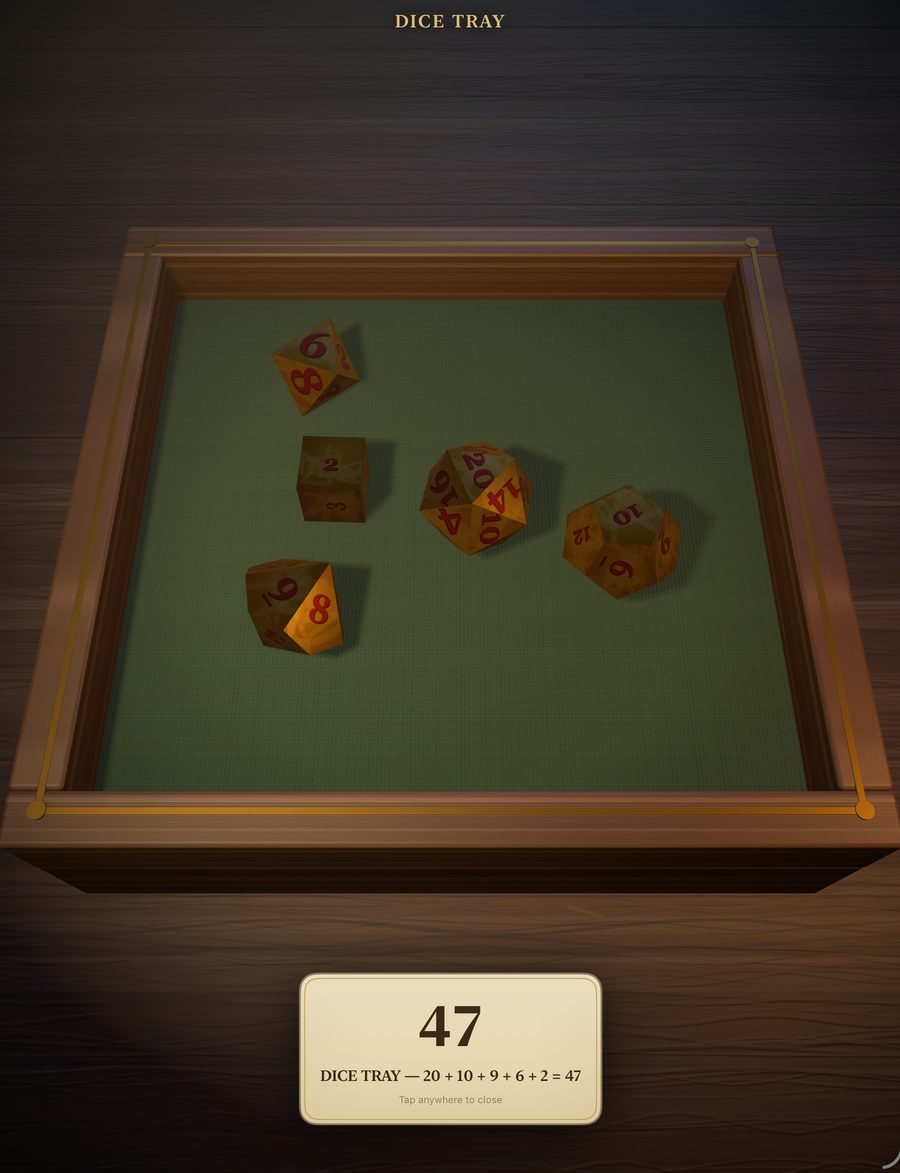
A real tray, in three dimensions, with dice that tumble and settle. Tap a save, a check or an attack anywhere on the sheet and watch it land — then read the verdict off the felt.
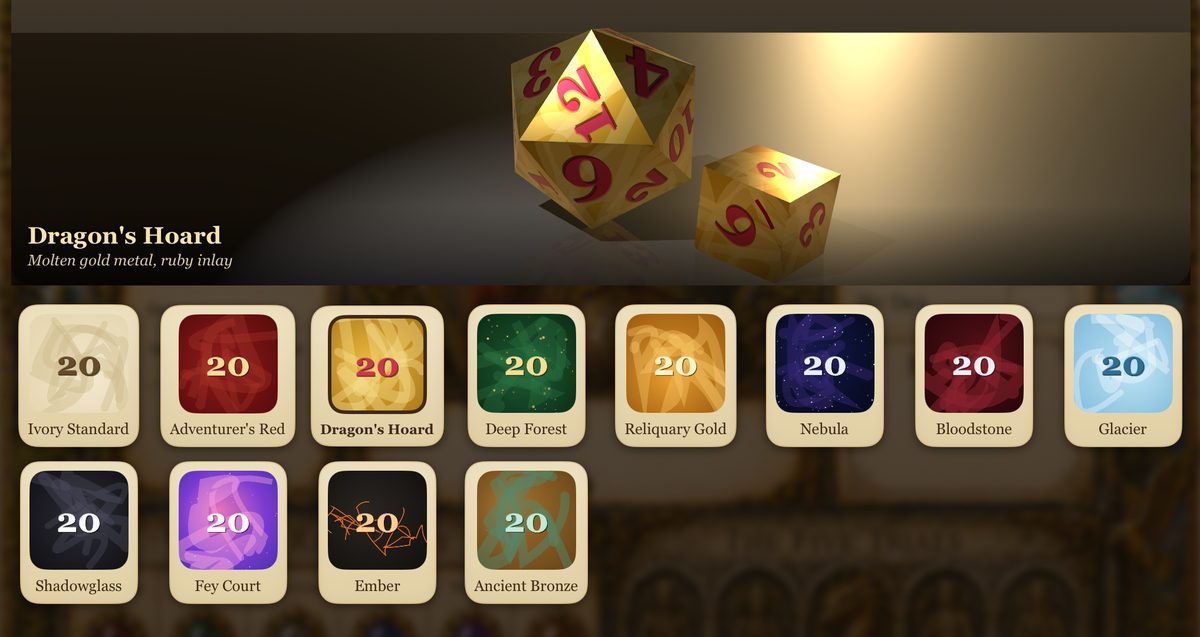
The sets are collector-grade: gemstone, metal and bone, each one modeled rather than tinted. Two come with the app; ten more are a one-time Dice Pack. Dice Pack II adds nine more.
Four rule sets, and its own engine for each
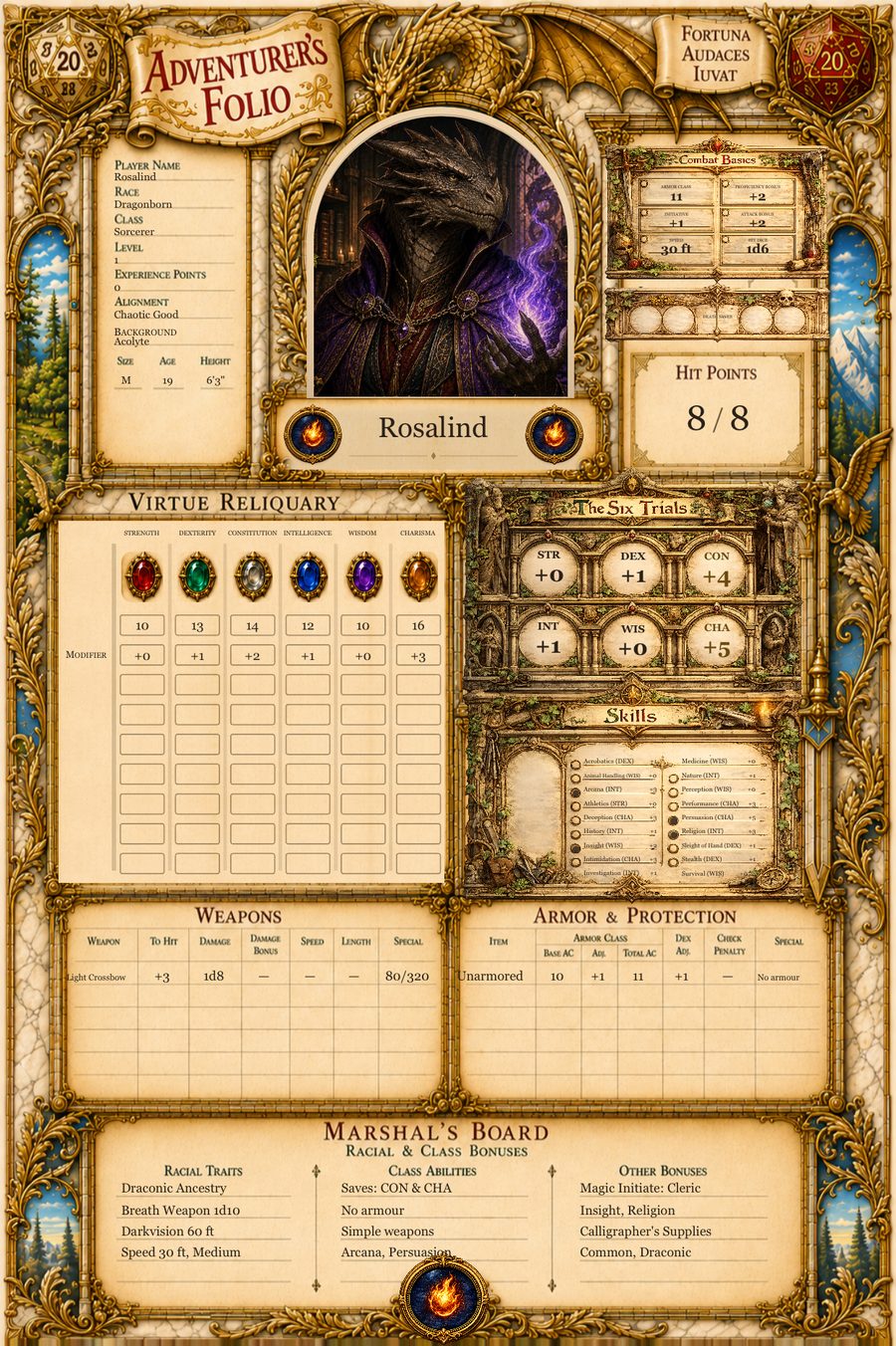
1st Edition (1977–1988) and the 2024 revision are both in the app from the start and both free. 2nd Edition (1989–1999) — nine classes, seven races, THAC0 and its own saving-throw tables — and 5th Edition (2014) are each a separate purchase, for tables still playing them.
Each gets its own page architecture and its own correctly computed numbers — five saving throws or six, THAC0 or an attack bonus, weapon proficiencies or skills. Neither is a reskin of the other: the panels that have no meaning in your edition are not there.
And the pages themselves are painted separately, down to the class ledgers — a 2024 sheet is not a first-edition sheet with different numbers on it.
Pick the ruleset when you make the hero. The sheet speaks your table’s dialect from then on.
Every hero gets a painted page
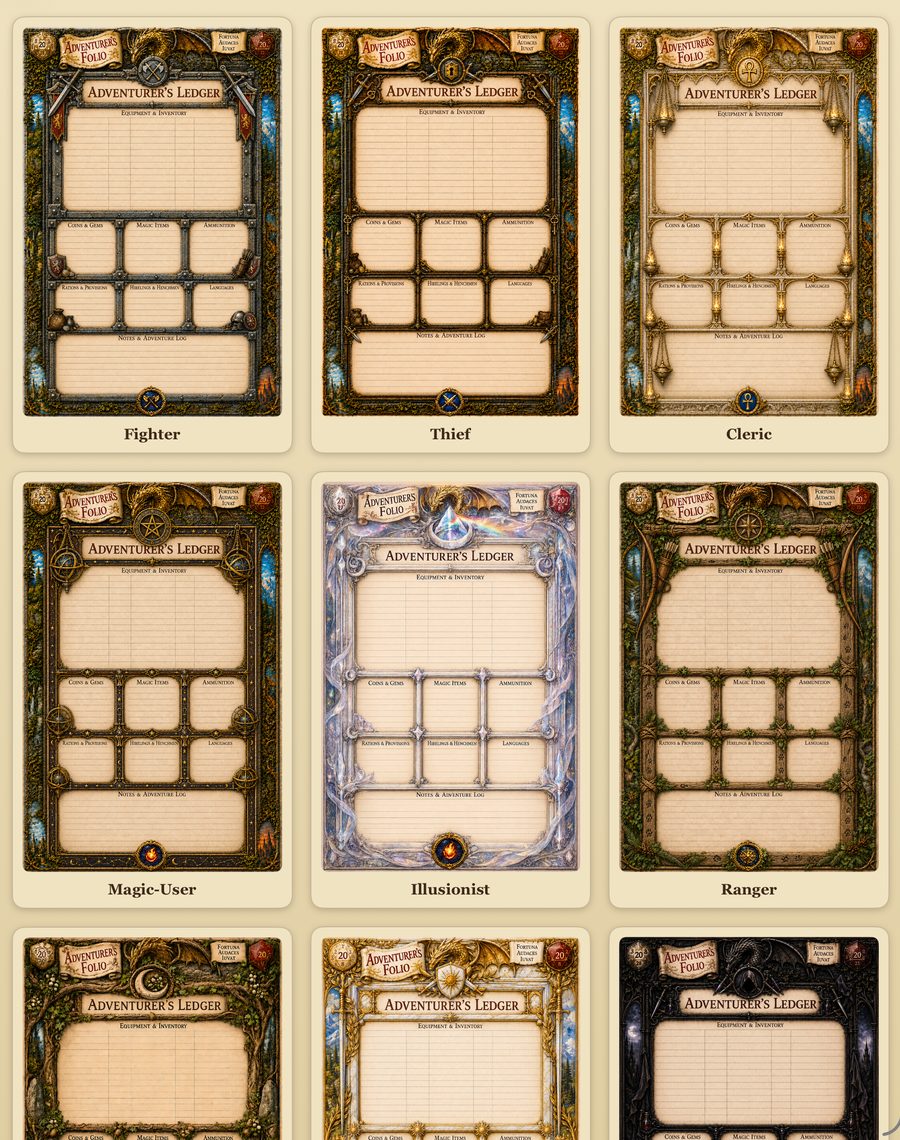
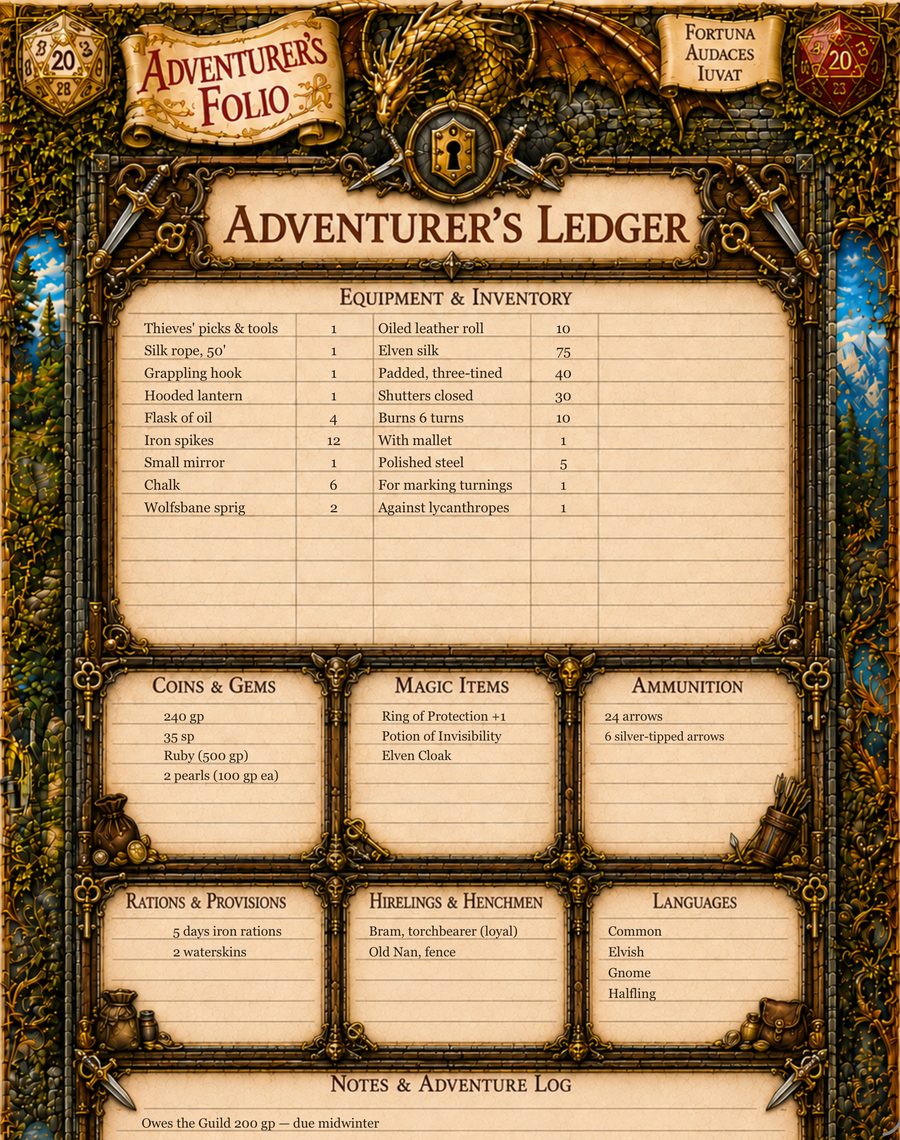
The thief’s guild book, the paladin’s temple codex, the magic-user’s illuminated grimoire, the druid’s grove tome. Each of these carries its own ledger page, its own seal and its own palette. Five fifth-edition classes share a page with a near neighbor — the barbarian writes on the fighter’s, the rogue on the thief’s, and the sorcerer, warlock and wizard on the magic-user’s. The Second Ledger Set paints each of those five its own.
Your hero’s second page is the one that belongs to them.
The things you always forget, where you can see them
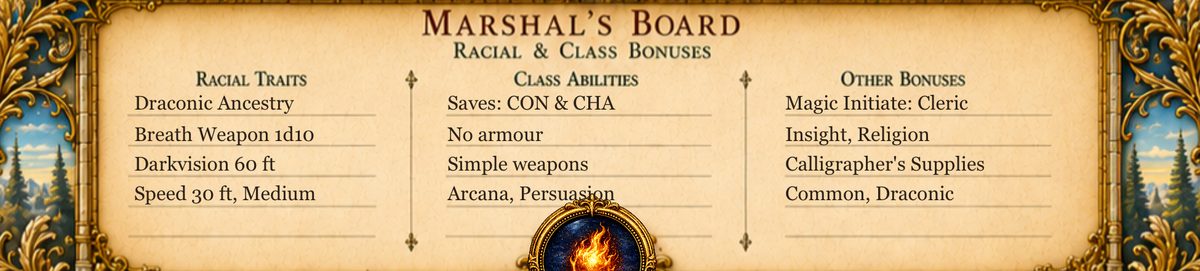
Darkvision. Which saves you are good at. The tool your background gave you and the languages you speak. They live at the bottom of the page, in three painted columns, instead of in a book you have to put down your dice to open.
Roll a hero and the board arrives already filled from your edition’s own rules. Build one by hand and the lines are yours to write.
Bring a character. Or roll one in ten seconds.
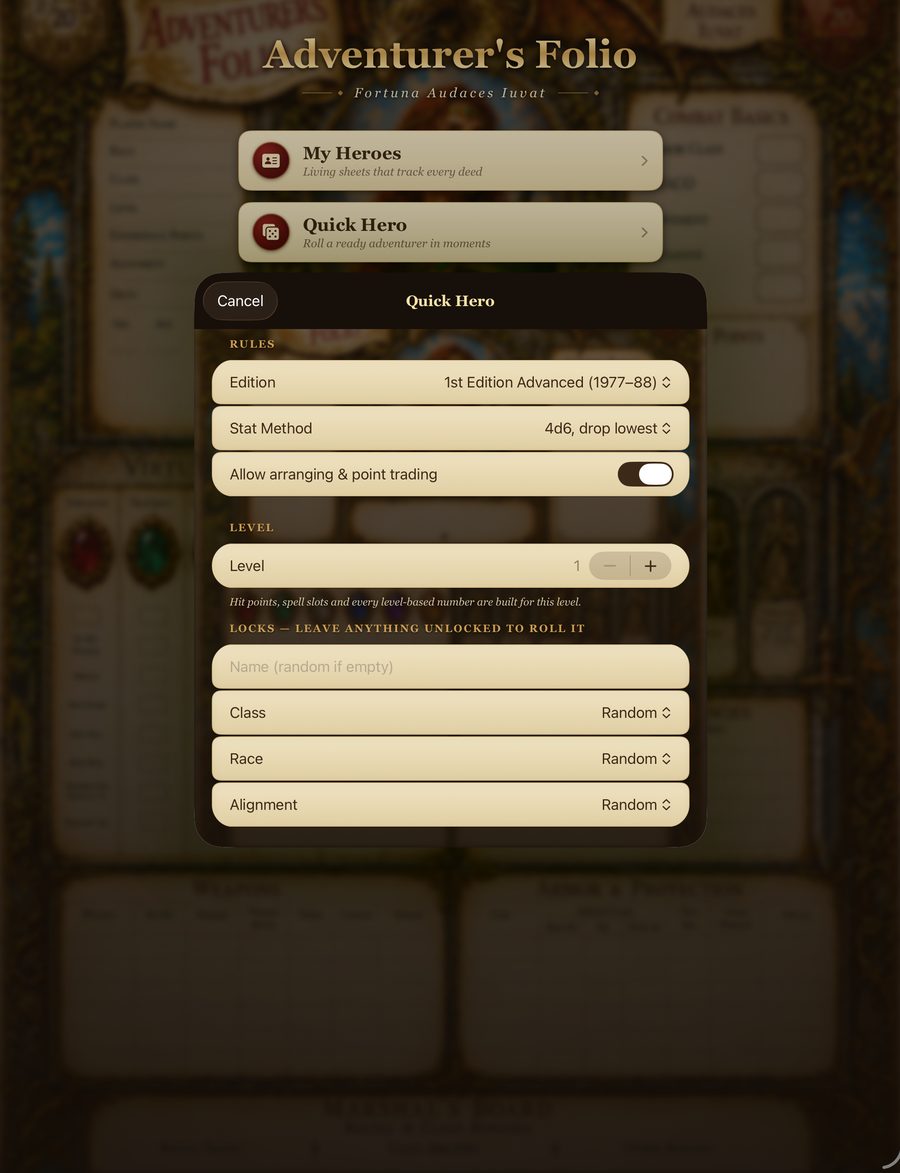
Quick Hero rolls a legal character for the edition you pick — class, race, alignment, scores, hit points and all — and lets you trade points around before you keep it. Or build one by hand, a line at a time.
What’s inside
- Living sheets. Every value typeset onto painted art, editable in place.
- Dice with weight. A 3D tray with collector-grade sets — tap a save or a check and watch it land.
- A roll log. Every roll kept with the hero who made it and the arithmetic behind it, so “what did I actually get?” has an answer.
- Four rule sets. 1st Edition and the 2024 revision included; 2nd Edition and 5th Edition (2014) as purchases. Each with its own painted panels and its own derived stats — and its own painted pages.
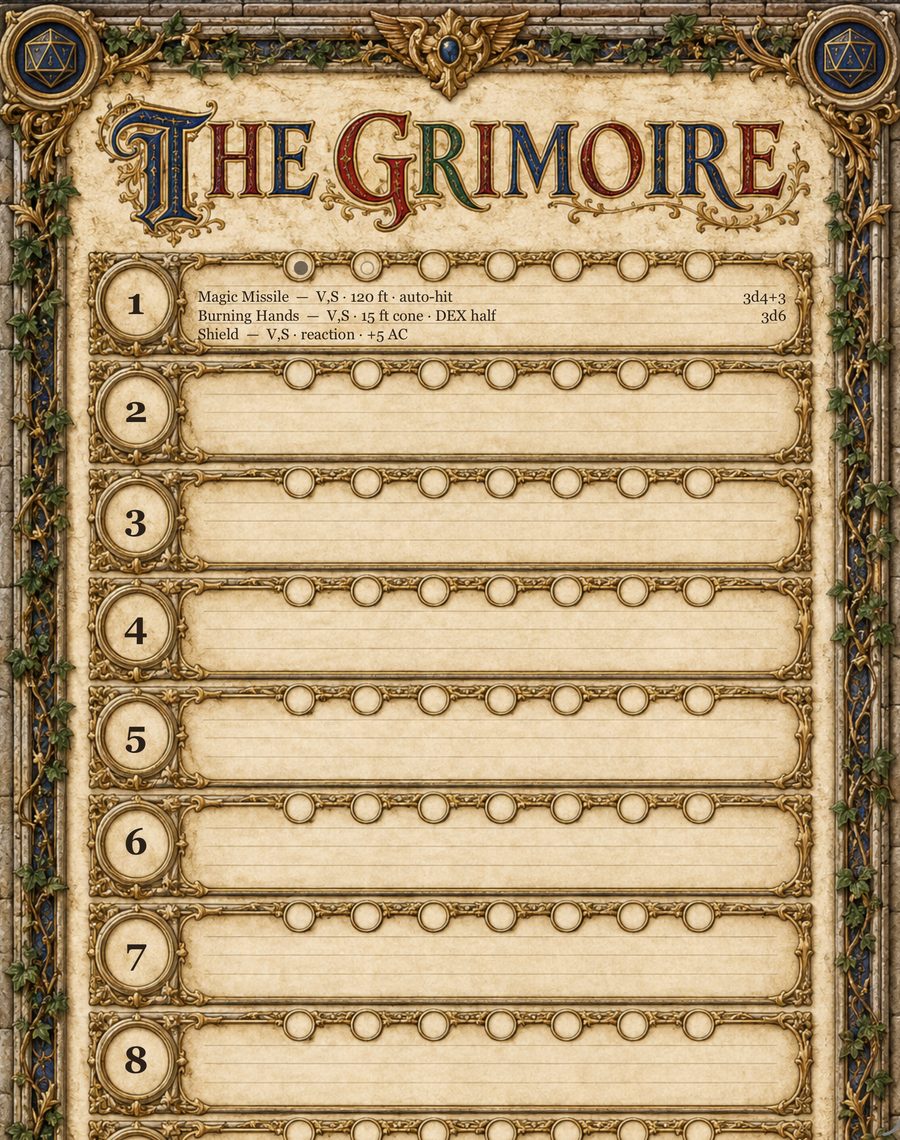
- A spell library. 1,461 spells across the rule sets — type a few letters on a hero's Grimoire and the entry completes itself, with full text for both fifth-edition rule sets and names and printed numbers for 1st and 2nd. Import a list your table sent and it sits alongside them.
- Passing things across the table. AirDrop a hero, a spell list, or one item out of your pack into another player’s — the sword leaves your sheet and arrives on theirs.
- Painted class pages. Class-themed pages, ledgers and seals.
- The Marshal’s Board. Racial traits, class abilities and what your background gave you, at the foot of the sheet — filled in for you on a rolled hero.
- Print-perfect PDFs. The painted sheet, the Adventurer’s Ledger, and more pages of Grimoire if your hero casts. US Letter, ready for pencil and ink.
- Portraits. Drop in a picture of your hero; it clips into the painted window.
How this compares to a fillable PDF
The best free character tools for fifth edition are automated PDFs. You fill them in on a computer and they do the arithmetic for you. They are genuinely good — if you play fifth edition at a desk, with a laptop open and a shelf of sourcebooks beside you, they are hard to beat.
They are also why this app exists. A PDF cannot be a page worth framing, it cannot roll a die, and it cannot come to the table in your pocket.
| An automated PDF | Adventurers Folio | |
|---|---|---|
| Where it runs | A Windows or macOS desktop, with Adobe Acrobat installed | iPhone and iPad |
| On a phone | The file opens. The automation does not run | The phone is the app |
| Rule sets | Fifth edition | 1st Edition, 2nd Edition, 5th Edition and the 2024 revision — each with its own rules engine, not one engine reskinned |
| What it looks like | A form, laid out well | A painted illuminated page, with your numbers typeset into it |
| Changing a number | Click the field and type | Tap the number where it sits on the page |
| Dice | None. A document cannot roll | A 3D tray with collector-grade sets, and a log of every roll |
| Spells | Generated spell sheets for your class | 1,461 spells that complete themselves as you type on a hero's page — full text for both fifth-edition rule sets, names and numbers for 1st and 2nd — plus any list your table imports |
| Handing something over | Send the file | AirDrop a hero, a spell list, or a single item from one player’s pack to another’s |
| Printing | A printer-friendly form | The painted page itself, US Letter, ready for pencil and ink |
| What it costs | Free, or pay what you want | Free for your first hero. $12.99 once for unlimited heroes; rule and dice packs sold separately. No subscription. |
If you play fifth edition on a desktop and own every sourcebook, the PDFs have nine years of head start on us and we would rather say so than pretend otherwise. If you play at a table, on a phone, in an edition older than 2014, or you simply want the sheet to be beautiful — that is what this is for.
What it costs
No subscription and no renewals. Everything below is a single payment, and what you buy stays bought.
Free
- One hero, and the sheet that keeps its own math.
- Two complete rule sets — 1st Edition (1977–1988) and the 2024 revision.
- The spell library that comes with them — 689 spells across those two rule sets, with no unlock in front of them. A reference behind a paywall is not a reference.
- Two dice sets, aged ivory and deep red resin, in the full 3D tray.
- Printing. One thing to know: printing a free hero sets its name, class, race, alignment and ability scores in ink. Everything else still changes as you play.
The Folio $12.99
- Unlimited heroes, and nothing set in ink.
- The painted class pages and class ledgers.
- Blank sheets to print for the whole party.
5th Edition (2014) $4.99
- Adds the 2014 ruleset, its own sheet and its spell tables.
2nd Edition (1989–1999) $4.99
- Adds the 2nd Edition ruleset — nine classes, seven races, THAC0 and its own saving-throw tables, on its own painted chassis.
Premium Dice Pack $4.99
- Ten more collector sets, from molten gold to charcoal veined with glowing ember.
Dice Pack II $4.99
- Nine more collector sets.
Second Ledger Set $3.99
- The barbarian, rogue, sorcerer, warlock and wizard each get their own painted ledger page instead of sharing a neighbor’s.
Yours, on your device
The folio has no accounts, no sign-in and no servers. It collects nothing about you and never sends your characters to us. It works with no signal at all. If you join a table in the same room, your character goes only to the devices at that table; the privacy policy sets out exactly what that sends.
Questions people actually ask
Do I need to know the rules to use it?
No, and you do not need to look anything up either. The app knows the tables for the ruleset you picked and does the arithmetic as you play. It is not a teacher and it will not tell you what to do on your turn — that is what the table is for.
Can I bring a character I already have?
Yes. Build one by hand, a line at a time, and put in whatever your existing sheet says. Nothing is computed that you cannot overwrite.
Can I play at a table with a Game Master?
Yes, in the same room. If your Game Master runs D20 Chair on an iPhone or iPad, open your hero, choose Join a Table and type the code they read out. Your hero appears on their screen, they can pass you private notes and call for rolls, and you roll in your own dice tray. Joining is part of the free app. How the table works.
Is there an Android version? A web version?
No. It is a native iPhone and iPad app, and the painted pages are the reason.
Does it work without signal?
Entirely. There is no server to reach.
What happens to my heroes if I delete the app?
They go with it, the same as any file on your device. Swipe a hero and tap
Export and you get a .folio file — a complete copy you keep,
and the same file that moves a character to another device. Import a Folio File
brings it back. To copy every hero at once, tap Back Up All Heroes in the Folio menu on My Heroes.
Is this an official product?
No. It is an independent app, not affiliated with or endorsed by any game publisher. It ships no adventures and no monsters.
Where do the spells come from?
The fifth-edition spells are the ones the System Reference Document licenses under Creative Commons, and they carry their full text. The 1st and 2nd Edition spells are names and printed numbers only — level, range, duration, components — because those books are not licensed for anyone to reprint, and we will not pretend otherwise. Keep the handbook open for what a spell does. Anything else your table uses, you can import.
Requirements
iPhone and iPad, iOS 17 or later.
Need a hand?
Questions, bugs and feature requests are all welcome — see the support page.
Compatible with fifth edition. Independent app; not affiliated with or endorsed by any game publisher.